Journal of Imrislir of his journey into the Dwarven Kingdom of Gibalgund
Author: Imrislir
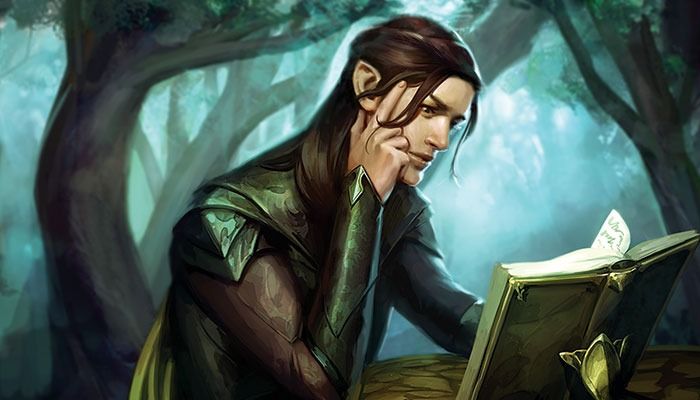
from the pages of the Journal of Imrislir, an Elf of the Semberwood Forest in Henneth Annun.
"Lord Fulin's arsenal astounds me. No, it excites my martial spirit. The armories of Arthedain and Cardolan are pale assemblages. Gibalgund's shine. Her arms twinkle like jewels. I saw all kinds of weapons, all engraved and inlaid with silver or gold or magic Ogamur. Fire springs from these blades and even against a long-knife, my ancient two-hand sword fared poorly.
I've seen fine arms in Gondolin. Stout steel is not unheard of, nor is Ithilnaur. But these are commonplace among the Lords of Gibalgund. They have weapons of even harder stuff, notably Eog and a host of odd Mithril alloys. I also saw some extremely pliable, but very strong metals which the Dwarves use for their peculiar toys. My brush can't betray all their properties, but here are a few:"
Metals
Adarcer: This is a white alloy, a fusion of Ang (iron), Glôin ("True-coal"), and Durang ("Dark-iron" or titanium). It's extremely strong, but somewhat rigid and difficult to work with once forged. I've seen it cleave iron without dulling.
Alcam: (S. "Tin") This soft, silvery metal is normally used to make the alloy Evyth, although the Dwarves use it to line water-basins, or for much of their decorative fillagree. It is clear that there is less Alcam in Gibalgund than there is among the Dwarves in the Iron Hills or the Grey Mountains, but this may be due to the abundance of better metal. Gibalgund's only Alcam deposits are in the southeastern mines of the Second Deep.
Ang: (S. "Iron") Pure Ang is silver-white and both malleable and ductile. Even in Gibalgund, though, it is rare. I agree with the Dwarven rule that anything which is virtually pure Ang is Ang. Common Ang is dark grey and hard, yet bendable. Ang is found throughout the mines of the northern Deeps, at every level and as far as the central Redhorn.
Borang: (S. "Steadfast-iron" or "Steel") This silvery alloy is a favorite of the Naugrim. Fused of Ang, Morasarn (carbon), and a smattering of one or more odd metals, it is strong and durable. Borang supports more than Ang, and is cheaper and more pliable than Adarcer.
Celeb: (S. "Silver") Dwarves often hoard their Celeb, but there's enough of it around Gibalgund to allow other uses. Here they use it for decorative inlays, chalices, plates, cups, mugs, horns, and virtually anywhere where they could use Mal (gold), but are too mean. Still, despite its malleability, Celeb is stronger than Mal. Plentiful veins of Celeb lie in the western reaches of the mines, in the First through Third Deeps.
Eog: (Du. "Eöl's Iron"; S. "Ang Eöl") Eog is undoubtedly the rarest of the metals of Gibalgund. It is a fusion of Mithril, Durang, and some unknown materials, apparently from an Elven recipe handed down from the House of Eöl. Fulin tells me that both the hottest and coldest of Gibalgund's forges are required to produce it, and I believe him. The stuff is awfully hard, tougher than Adarcer, and even seems stronger than Ithilnaur. It also has a strange appearance. I saw silver, black, white and red varieties and none had any lustre.
Evyth: (S. "Bronze") Evyth is a golden metal formed of Alcam and Paer. Dwarves use it for decoration, or trade it to the Men of Erindor and Eorahn. Though, trading with the men of Eorahn can be difficult if passing through Chennacatt which is ruled by Akhorahil the Fourth.
Galnin: (S. "Shining-white" or "Aluminium") I've only heard of Galnin; I don't think I've seen it. It is silvery-white, appearing like Alcam or Celeb, but it is lighter and will neither tarnish nor corrode. I'm told the Galnin only comes mixed in an ore found high in southwestern part of the mines of the Seventh Deep. Only intense fires can wrest the pure metal from its ore, and this must account for its rarity. Since it's not as strong as Ang, and Dwarves like stout material, I suspect they have few uses for it.
Ithildin: (S. "Moon-star") Moon-star is a soft, silvery Elven metal, fused from Mithril and other substances. I'm acquainted with it because of my visits to the court of Arveleg I at Cormallen, and from one venture to the glorious ruins of Annúminas at Lindathal. Rare and strange, Ithildin is used for secret inscriptions and other magical purposes. Since it can only be seen by the light of the Moon or Stars, the Dwarves usually employ it outside or beneath windows.
Ithilnaur: (S. "Moon-fire") Ithilnaur is surprisingly common in Gibalgund, being used for prized coin and grand armaments. Like Ithildin it is made from Mithril and looks like beautifully pure Celeb. Unlike Moon-star, it is hard and makes superb weapons or armor.
Mal: (S. "Gold") Gibalgund is full of Mal, which the Dwarves value above all other metals, save Mithril. Its golden color seduces the Stunted-folk and often raises their unhealthy passions. It is too soft for heavy tasks, but it has its merits. Mal doesn't tarnish and is recognized by all Peoples as valuable. When they aren't hoarding the noble metal, Dwarves use it for coinage and all sorts of ornamental or formal metalwork. Mal is mined in the western and northern sections of Gibalgund's Mines, particularly in the First through Fourth Deeps. There, the veins are rich and the Mal pure.
Mithril: (S. "Grey Brilliance" or "True-silver") I grew up with tales of the Mithril from Aered Amon, and Gibalgund may now be the only source of True-silver, save perhaps by the reclusive Naugrim of the Iron Hills. It no doubt contributes to the vast wealth held by Dáin's Folk. Wherever I travel to lands where it is known, it is considered the richest of metals. Silvery, Mithril appears as Celeb, yet it does not tarnish and always appears polished. It is also strong and malleable, and produces enchanted metals of incomparable quality. The famed Mithril lode is but a single vein. Running northward from the Seventh Deep, it extends well under the mighty Redhorn.
Ogamur: (S. "From Gamur") Dwarves use Ogamur for chores requiring extreme flexibility and elasticity. I have never witnessed a fabric, much less a metal, that can stretch like this black substance. Its properties make it ideal for springing devices and works designed to absorb impact. It is also difficult to make, however, which accounts for its sparing use. Fulin told me that it is an enchanted mix, derived from an eastern Dwarf-house in the late First Age. I know nothing more of its makeup.
Paer: (S. "Copper") Most of Gibalgund's Paer comes from mines in the northwestern section of the Third through Sixth Deeps. I did hear of a great discovery down in the First Deep, beneath the Redhorn, but this rumor was never confirmed. Of course, this reddish-gold metal is found throughout Aeriador, especially in the highlands of Erindor and Erebor, so it is not very valuable and there is little trade in the commodity. Before the Great Demonic Wars, the Dwarves occasionally sent some to Arnor for use as coin, but the production in Gibalgund has never been unusually significant. Most of Gibalgund's Paer is used for Watertroughs and basins, or in the production of the more durable Evyth. It is too soft and malleable for Dwarven tastes. All the Dwarves I met saw little beauty or use in the metal.
Tasarang: (S. "Willow-iron"; W. "Shalk") At first, I thought Tasarang was white Ogamur, but I quickly realized my error when I first handled the stuff. Although it bends easily and has tremendous spring, it doesn't stretch. Tasarang is also extremely light, even lighter than Galnin, like wood or pumice. Because its ore is as white as chalk, weighs little, and is found below limestone intrusions, it is called "Shalk" in the Common Tongue. I saw some of the ore in the mines of the westernmost Fifth Deep and understand the comparison. The tremendous heat and cold used make the metal change its texture, yet it only enhances the white hue. Actually, more than one fellow I spoke with thinks it glows.
Stone
Prince Eldacil's memoirs only begin to detail the many metals of Gibalgund. The full array is beyond reasonable description, and a chronicler only has so much time.
The task of outlining the variety of Gibalgund's stone-wealth is even more oppressive. Limestone, quartz, and granite are the most prevalent; however, there are considerable quantities of other rock. Gibalgund is also the domain of hundreds of age-old sediments, compressed shales and sandstones, reformed marbles and schists, and volcanic basalts. Eldacil's journal speaks of many, but the few he favored in his mid-Thrimidge notes of SA410 dominate Dwarven stonecrafts.
Naurond: (S. "Fire-rock") "Nowhere is there more Fire-rock. Naurond is the stone that binds Gibalgund. Behind every facade, beneath every floor, there is Fire-rock of some kind. Coarse granite encases the chambers near the surface, in far eastern, western, northern, or southern reaches. Shimmering grains cover this grey stone, just like the granite I found all through the Ettenmoors of Dorlomin or on the North Downs of Arthedain.
Further into the mountain home, smooth black, basalt replaces granite as the foundation stone. Here the Dwarves use polished basalt blocks for unfaced walls and structural columns, and all along the floors. This makes the rooms and halls remarkably solid, for basalt is harder and heavier than granite.
I cleaned my weapons with ground Fire-rock of a light and delicate variety. A type of pumice, it came from the famous "Domes" of the Fifth Deep. There, the Stunted-folk cut light Fire-rocks from the sides of gigantic dome-like chambers which are connected by hundreds of small tunnels, gas-passages bored and cooled before the Elder Days. Dwarves quarry these abrasive pumices for use as polishing or gentle grinding materials.
Mirond: (S. "Jewel-rock") In Henneth Annun, we were always impressed with the gems from the Iron Hills (S. "Red Hills"), but we had never seen true wealth. Gibalgund produces countless numbers of an endless assortment of gems and fine glasses, including many rarely seen outside the Dwarf-halls. The Dwarves call them Jewel-rocks and classify them according to a perplexing system based on strength, hardness, and color. Still, I learned that all Jewel-rocks fall into one of two principal categories: Fenen (S. "Veils"), "hidden crystals" or what I call "Glasses"; or Maegelenath (S. "Sharp-stars"), "bold crystals" or common "Gemstones."
Of the Glasses, Laen is without doubt the most intriguing. It is as hard as a diamond, but it is smooth and without cleavage-points or flaws. Better yet, it can be molded when cooled beyond cold, for it is enchanted, like Mithril. Natural Laen is black, like the Tower of High Sorcery; however, when worked it can be colored or made clear to the eye.
Quartzes and obsidians provide most of Gibalgund's Glasses, although there are considerable numbers of topazes and clear-glasses. On the other hand, no one Dwarven Gemstone was spoken of as preeminent. I saw equal numbers of diamonds, emeralds, rubies, amethysts, aquamarines, and the like. Since the Dwarves seem to mine it all in Gibalgund, I was stunned. This convinced me that Gibalgund is either the focus of Aeriador, or specially blessed by the Aratari.
Dirielond: (S. "Gazing-rock") The Stunted-folk use Gazing-rock for decorative uses, or in places where Fire-rock is unwieldy. They yield ceremonial columns, wall-facings, floor composites, stairs, and a number of elaborate stone chamber furnishings.
Of Gazing-rocks, the Dwarves count on two types above all, and of these, there are hard and soft forms. Those called "Block-stones" include beautiful colored marbles, and the softer "Wet-rocks," or limestone. The compressed marbles are sliced from the walls of the First and Second Deeps, while the cool, damp limestones surround most of the natural cave-chambers. Some may think the marble more spectacular, but I think Gibalgund's multitude of limestone "roof-spikes" (stalactites) and "floor-spikes" (stalagmites) retain a unique grace and charm. The Dwarves seem to agree, for they retain the better of these formations whenever delving. Many are carved, and a substantial lot are given solemn respect. Dwarf-legends dub them "Selene's Tears."
"Slab-stones" make up the rest of Gibalgund's Gazing-rocks. Schist, flint, and slate are the best known and most commonly employed. When cut and polished, they make ideal floor-stones, stairs, and flat table surfaces. But my favorite examples remain in a pristine state. All through Gibalgund's mines and caverns, there are waterfalls careening over natural slate staircases, their waters collecting in unaffected pools lined with sparkling mica and alternating layers of multi-hued schist.
STONE CLASSIFICATIONS
| Naurond ("Fire-rock") | granite, basalt, pumice, etc., Mirond("Jewel-rock") |
| Fenen("Glasses") | Laen, quartzes, obsidians, topazes, etc. |
| Maegelenath("Gemstones") | diamonds, emeralds, rubies, etc., Dirielond("Gazing-rock") |
| Block-stonesmarble | Wet-rockslimestone, Slab-stonesschist, flint, slate, mica, etc. |